
Sponsored

General Commission on the
Status and Role of Women

Coffee Chats
Join Denise Smartt Sears and AC COSROWs from across the connection for an opportunity to connect, learn, and share within the COSROW community. These virtual gatherings offer networking, resource sharing, and idea exchange in a welcoming environment. Grab your beverage of choice, engage in insightful discussions, and contribute to a vibrant network that fosters growth and collaboration.

GCSRW Announces Events at General Conference
Delegates and attendees at the United Methodist General Conference in Charlotte, N.C. will have several opportunities to celebrate, recognize and be informed about issues impacting women within The United Methodist Church.

GCSRW at General Conference
GCSRW is a working agency at General Conference. Some of GCSRW's responsibilities are to monitor legislative sessions and plenary; assist in delegate orientation and encourage healthy boundaries; guide the Church in the prevention and response to sexual misconduct.Learn more about our work, events and legislation.
The General Commission on the Status and Role of Women advocates for full participation of women in the total life of The United Methodist Church. We’re helping the church recognize every person – clergy and lay, women and men, adults and children - as full and equal parts of God’s human family. We believe that a fully engaged and empowered membership is vital to The United Methodist Church’s mission "to make disciples of Jesus Christ for the transformation of the world."
Sexual Ethics
We provide resources for how to respond to and prevent sexual misconduct in The United Methodist Church through education, policies and support.
Monitoring
We monitor annual conferences, jurisdictional conferences, and the General Conference for inclusiveness and report this information to the UMC.
Education
We educate on inclusiveness, expansive language and women's issues in support of both the Church and the world.
Leadership
We nurture clergy and lay leaders in the church, both women and men, to recognize every person – as full and equal parts of God’s human family.

AC COSROW Resources
For 50 years GCSRW and leaders across The UMC have labored to eradicate sexism in the church. What resources are available for your Annual Conference's journey?
Sponsored

#MeToo Toolkit
A guide to identifying, understanding and responding to sexual misconduct.

Wisdom Talks
Wisdom Talks is our monthly e-newsletter designed to communicate information to facilitate the advancement of women at all levels of The United Methodist Church, presented by The General Commission on the Status and Role of Women.

How Far We've Come and the Distance Still to Go
UMC Clergywomen are Still Significantly Undercompensated.
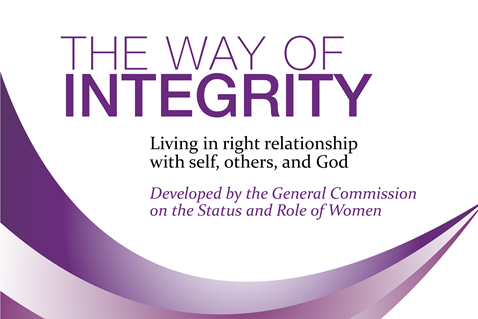
The Way of Integrity
A small group study encouraging living in right relationship with self and others.
Leaders GuideParticipants Guide
Sponsored